


Things Worth Spending More on When Buying a Home (And the Things That Aren’t)
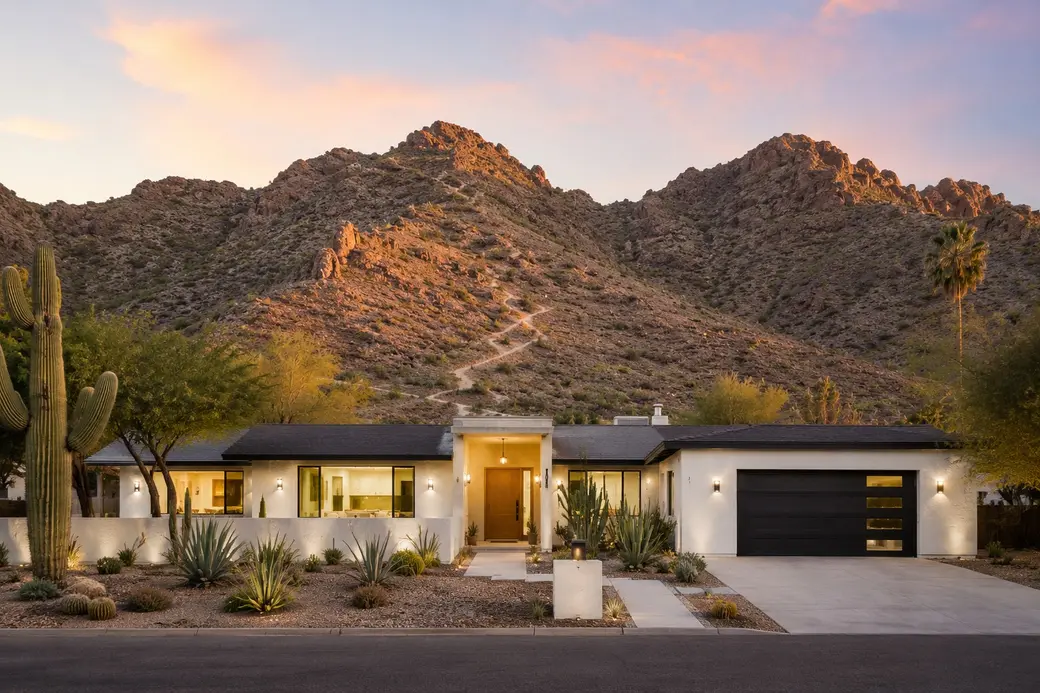
I wanted to walk away. As far as I was concerned, I had seen enough.
At the time, Grace was the only real estate professional standing in the house. She had walked through hundreds of homes, guided numerous buyers through some of the most significant decisions of their lives, and built a successful career on helping people see opportunities where others see obstacles. For years, I had watched her carefully manage difficult transactions and listened as she thoughtfully navigated clients’ pain points. As I was standing in the master bedroom of an early 1970s house in one of the most coveted neighborhoods in the Valley, looking at carpet… wall to wall, just everywhere, including under the sink, my pain point was highly inflamed.
On top of that, the sink was in the bedroom, not the bathroom. Yes, the bedroom. It was the kind of layout you find in a roadside motel where you can sit on the bed and see yourself brushing your teeth. If the garage door, the interior security door, and the master bedroom door were all open at the same time, someone on the street in front of the house had a direct line of sight to whomever was in the walk-in shower. Half of the home’s interior walls made no sense for modern living. The kitchen and two bathrooms all had different outdated tiles. There was no rhyme, no reason, no logic connecting any of it. Two enormous messy trees dominated the front yard. Sure, they provided shade from the peak of the late afternoon Arizona sun, but they completely swallowed the view from what could have been a spectacular picture window. The landscaping, front and back, looked like an afterthought that had long since stopped trying. It all felt like a time capsule from an era where nobody was rushing, especially me, back to revisit.
I had good money, and I wanted to spend it on something that didn’t require me to use my imagination just to get through the front door. “What’s next on your list?” I asked. Grace replied, “Look again.”
Here is something the real estate industry doesn’t always say out loud: most buyers can only see what a home is, not what it could be. That gap between what something is and what it could be is where the greatest value in real estate quietly lives.
Instinctually, we are wired for comfort, and we desire to walk into a home and feel it immediately, that warm recognition that says yes, this is it, I can see my life here. When a home doesn’t offer that feeling freely or if it asks us to work for it, to squint past the carpet and the outdated fixtures in the motel bathroom layout to imagine something that doesn’t exist yet, most of us don’t. Most of us won’t. Most of us thank the agent, walk back to the car, and wait for something easier. This is completely human. It is also, very often, expensive.
The market prices what it sees: the carpet under the sink, the mismatched floors, and trees blocking a picturesque mountain view with an awe-inspiring sunset. What it doesn’t price, what it can’t price, is solid block construction, a good roof, a pool, a two-car garage, a giant picture window, and a location sitting directly across from a mountain trailhead surrounded by homes worth several hundred thousand dollars more. The ugly house on the right street is one of real estate’s most reliable opportunities, and it goes unnoticed every single day by buyers who were waiting to feel something they could have built instead.
Being the consummate real estate professional, Grace stood in that same master bedroom, looked at that same carpet, glanced at that same sink sitting out in the open like it owned the joint, and saw something completely different than I did. She saw a wall that could move. Walking around the house, she saw solid block construction with stucco that would outlast trends, and a pool and garage (two things you cannot easily add later without significant cost). Continuing to the front, she saw a picture window that would frame a mountain view that money alone could not manufacture once the trees were removed. All this was on a street where the neighbors’ homes were valued at several hundred thousand dollars more, a rising tide that would continue to swell.
She called them polishing touches. I called them dealbreakers.
She was right.
We bought the house, moved walls, removed the trees, and reimagined the master to feel like the sanctuary it always had the bones to be. Redoing the landscaping and unifying the floors felt as if we had honored what the house had been trying to be underneath all those decades of decisions that hadn’t served it well. The transformation was complete enough that people driving by now slow down to take pictures. Walkers heading to the trailhead stop to discuss and admire the landscaping. It became the kind of home that makes strangers pause, not because we built something new, but because we finally let what was always there come through. The bones were always good. We (well, I) just had to be willing to see them and be confident that spending my good money was going to be well worth it.
So, what is worth spending more on and what isn’t? Asking the right questions sets you up to be protected every time. As your trusted guides for life’s biggest moves, the Brazier Group is here to assist you in arriving at the appropriate response for your unique situation and vision.
Spend more on location. This always serves you. A home can be renovated from top to bottom, but it cannot be picked up and moved to a better street. The neighborhood, the proximity to what matters to you, the trajectory of value around it are fixed and worth the stretch. Everything else is negotiable.
Spend more on the right location within your budget. The smaller house on the better street will almost always outperform the larger house on the lesser one. Buyers stretch for square footage when they should be stretching for zip codes.
Spend more on the bones. The foundation, roof, construction quality, and structural integrity are expensive fixes that cosmetic beauty cannot offset. A solid block home with a tired interior is a canvas. A beautifully finished home with a falling foundation is a trap. Know the difference before you fall in love with the finishes.
Spend more on the inspection. This is not the place to cut corners or rush to win a bidding war. A thorough inspection goes beyond the surface to check systems and investigates what the upgrades might be covering. It is the most important money you will spend during the entire process. What you learn there determines everything that follows.
Don’t overspend on finishes you’ll replace. Countertops, flooring, fixtures, and paint are personal and changeable. Don’t pay a premium for someone else’s taste when those dollars could go toward something fixed and foundational. The granite someone installed in 1974 is not the reason to walk away from a solid home on a great street.
Don’t let cosmetic chaos talk you out of structural integrity. Carpet under the sink, mismatched floors, a sink in the bedroom, and outdated everything are all loud. They are also, every single one of them, fixable. Things like location, bones, system, and the lot are almost always quiet. Learn to listen for the quiet things.
Don’t let your imagination stop at what a home currently is. The best purchase I almost didn’t make was the one that asked me to see past everything visible to everything possible. It took my wife holding the vision steady while I was ready to walk. Only work with an agent who can do the same for you, because sometimes the right home for you doesn’t look like it yet.
Categories
- All Blogs (13)
- ac unit (1)
- acres (1)
- arizona housing (2)
- arizona real estate (1)
- arizona water & growth policy (1)
- best investment (1)
- buyer education (3)
- Buyer Psychology (1)
- buying a fixer upper (1)
- closing day feelings (1)
- clutter (1)
- communication (3)
- concessions (2)
- creating space (1)
- downsizing (2)
- downsizing and moving (1)
- emotional wellness (1)
- family & home (1)
- first time home buyers (3)
- grief and retirement (1)
- grief of selling a house (1)
- groundwater & assured water supply (1)
- hidden potential (1)
- home buying process (2)
- home inspection (3)
- home renovation (1)
- home sellers (3)
- home selling tips (2)
- Home Staging (1)
- how to see potential (1)
- hvac (1)
- identity loss (2)
- interest rates (1)
- investment mindset (1)
- is it worth buying a house that needs renovation (2)
- land and ranch (2)
- land for sale (2)
- land specialist (1)
- letting go (2)
- life transitions (1)
- Listing Prep (1)
- location vs finishes (1)
- metro phoenix (2)
- new construction (1)
- now or later (2)
- odors (1)
- organizing (1)
- outdoor lifestyle (1)
- real estate (7)
- real estate advice (4)
- real estate tips (2)
- repurposing items (1)
- retirement (1)
- retirement purpose (1)
- retirement transition (1)
- retiring in Metro Phoenix (1)
- rightsizing (2)
- safety (1)
- security (1)
- Seller Resources (1)
- selling childhood home (1)
- selling family home (1)
- selling parents house after death (1)
- sentimental home sale (1)
- structural integrity vs cosmetic updates (1)
- transitioning (1)
- understanding (4)
- vacant homes (1)
- vacant land (1)
- what nobody says (1)
- what to expect emotionally when selling a home (1)
- when to replace AC (1)
Recent Posts



Grace & Keith Brazier
Trusted Guides for Life's Biggest Moves License ID: 651520000