


What Buyers See Before They Ever Walk Through Your Door
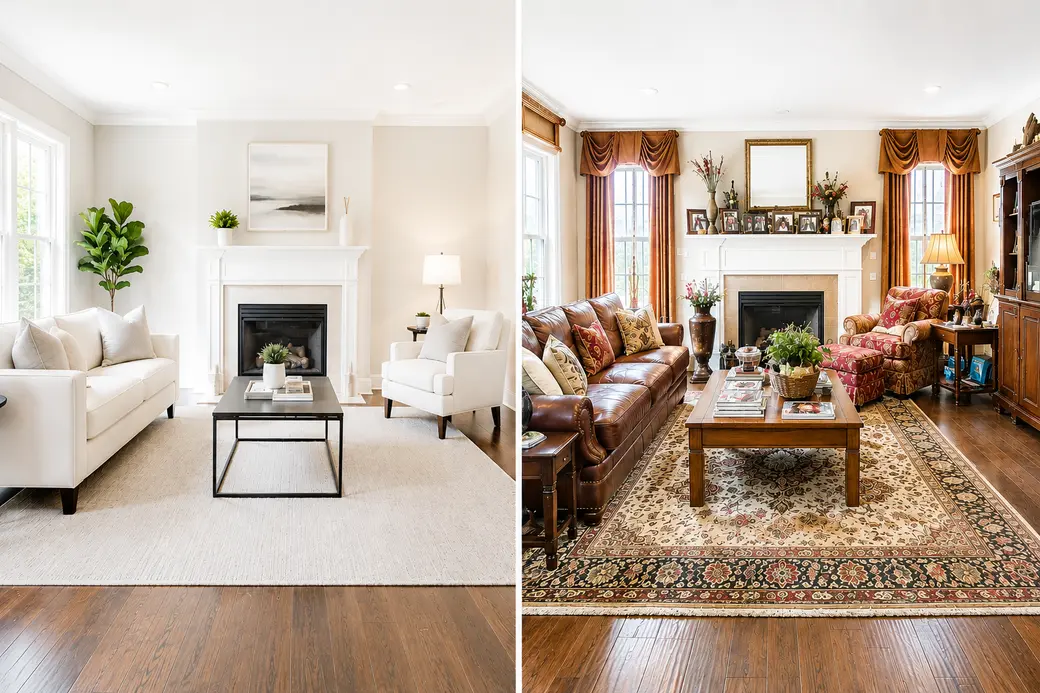
Recently, we walked into a high-end listing in a great location, the kind of property that should have been turning heads online and drawing a line of buyers to the door, but the moment we stepped inside, something shifted. The living room was crowded with furniture, too much of it, arranged in a way that made the space feel smaller and harder to read than it actually was. One room down the hall sat completely empty, offering no clue about what it could be or how it might be used. Another room was set up so awkwardly that it raised more questions than it answered. Family photos lined almost every wall. Decorations filled every surface. At the same time, we looked at each other, and the words just fell out “This is a lot.” Standing there I could already hear the buyer objections forming in my head, and I knew, with quiet certainty, that this home wasn’t going to sell. No, not like this.
The First Showing Happens Online
Here’s something that has fundamentally changed the way homes sell: buyers make up their minds before they ever knock on your door. The first showing isn’t the Saturday afternoon walk-through. It’s on the Tuesday night scroll through photos on a phone, often while sitting on the couch in pajamas. If your home doesn’t stop them mid-scroll, they keep going. It’s that simple. Photos of a cluttered room, a bare echoing space, or furniture that fights the floor plan don’t just underwhelm, they eliminate your home from consideration before a buyer has even had the chance to fall in love with it. Staging isn’t about decorating. It’s about communicating. Every room needs to tell a buyer a clear, simple story: “This is what your life could be like here.”
Buyers Need Help Seeing the Possibility
Not every buyer has a trained eye for space. Most people can’t walk into an empty room and naturally envision furniture placement, traffic flow, or function. They need to be shown. This is exactly why model homes exist. Developers figured out a long time ago that people don’t buy square footage, they buy a feeling. The home we walked into had an unusual floor plan, the kind that needs guidance to make sense. Instead, the excess furniture created confusion. Buyers were left trying to mentally rearrange a room that was already packed, rather than imagining themselves living in it. The empty room down the hall raised an even harder question: “What is this even for?” Without an answer, it felt like wasted space instead of untapped potential. Proper staging answers those questions before the buyer has to ask them. It says: “This is a reading nook. Here is your home office. This dining area seats six comfortably.” It removes the mental work from the buyer and replaces it with possibility.
Depersonalize to Invite Connection
There’s a quiet psychology at work when a buyer tours a home. They’re not just evaluating square footage or kitchen finishes, they’re asking themselves, “Could I live here? Could this be mine?” The fastest way to interrupt those questions is to overwhelm them with evidence that it belongs to someone else. The family photos, the personalized décor, the collections and tchotchkes that reflect a life well-lived mean everything to the seller and nearly nothing to the buyer. In fact, they create distance. A buyer standing in front of a wall of someone else’s memories isn’t picturing their own life there. They’re a visitor to yours. Think of it like an Airbnb or a model home with clean surfaces, neutral warmth, and intentional touches that feel inviting without personal. The goal is a home that feels like it could belong to anyone, because that’s the only way it will feel like it could belong to the buyer standing in it.
The Conversation Nobody Wants to Have
It is said that confession is good for the soul, so here you go… We had a seller, someone we cared about, someone we wanted to win for who simply wasn’t ready to hear what we were telling her. We talked about decluttering and depersonalizing, making the case until we were mentally and emotionally exhausted. At first glance, it seemed as though she was just unreasonable, but it turned out not to be that at all. She was proud of her home and all the years she spent building a life in it, and it showed, but that pride, completely understandable, completely human was working against her in the market. Eventually, we sold the home and made it to the finish line, but I genuinely believe she left at least ten thousand dollars on the table. There were fewer offers, less urgency, and surely less leverage all because buyers couldn’t see past what was there to imagine what could be. That’s the part that stays with me, because it didn’t have to go that way.
What Proper Staging Actually Looks Like
This is where our team has a distinct advantage. My wife and business partner, Grace, is a former professional organizer and a certified staging advocate. Together, we bring a rare combination of market expertise and staging knowledge to every listing we represent. We’ve walked through countless homes, identified exactly what’s working against a seller, and helped transform those spaces into properties that compete and earn top dollar. That experience isn’t incidental to what we do. It’s central to it.
Here’s what we generally guide our sellers through:
Edit ruthlessly. Remove at least a third of the furniture in most rooms. If it makes the space feel bigger, it stays. If it creates clutter or confusion, it goes.
Clear the surfaces. Leave only intentional, minimal décor on the countertops, mantels, and shelves. Buyers should see the features of your home, not your collections.
Give every room a purpose. What about that empty bedroom? Make it into a guest room, a home office, or a reading room. A purposeless room feels like a problem. A staged room feels like a bonus.
Take down the personal photos. This is often the hardest ask, but it matters more than almost anything else. Buyers need to see themselves in your home, not feel like a guest in it.
Aim for the Airbnb standard. We’re striving for clean, warm, welcoming, neutral, immaculate in the photos, and inviting in person. That’s the bar.
The Bottom Line
Staging isn’t about making your home look like it doesn’t belong to you. It’s about making it look like it could belong to someone else, specifically, the someone else who’s about to write you an offer. When buyers can see the space, feel the potential, and imagine their lives unfolding inside your walls, that’s when the offers come. That’s when multiple buyers compete and you get more than the asking price.
When buyers can’t envision all of that, they scroll past, they tour and leave unconvinced, or they offer less because the home doesn’t move them.
We’ve seen both outcomes firsthand, and every time, the difference between them was how well the home was prepared to be seen. If you’re preparing to sell, you deserve a team that understands both sides of the equation, the market and the presentation. At the Brazier Group, we bring the strategy, the staging eyes, and the market expertise to help your home compete and earn what it’s worth.
Categories
- All Blogs (13)
- ac unit (1)
- acres (1)
- arizona housing (2)
- arizona real estate (1)
- arizona water & growth policy (1)
- best investment (1)
- buyer education (3)
- Buyer Psychology (1)
- buying a fixer upper (1)
- closing day feelings (1)
- clutter (1)
- communication (3)
- concessions (2)
- creating space (1)
- downsizing (2)
- downsizing and moving (1)
- emotional wellness (1)
- family & home (1)
- first time home buyers (3)
- grief and retirement (1)
- grief of selling a house (1)
- groundwater & assured water supply (1)
- hidden potential (1)
- home buying process (2)
- home inspection (3)
- home renovation (1)
- home sellers (3)
- home selling tips (2)
- Home Staging (1)
- how to see potential (1)
- hvac (1)
- identity loss (2)
- interest rates (1)
- investment mindset (1)
- is it worth buying a house that needs renovation (2)
- land and ranch (2)
- land for sale (2)
- land specialist (1)
- letting go (2)
- life transitions (1)
- Listing Prep (1)
- location vs finishes (1)
- metro phoenix (2)
- new construction (1)
- now or later (2)
- odors (1)
- organizing (1)
- outdoor lifestyle (1)
- real estate (7)
- real estate advice (4)
- real estate tips (2)
- repurposing items (1)
- retirement (1)
- retirement purpose (1)
- retirement transition (1)
- retiring in Metro Phoenix (1)
- rightsizing (2)
- safety (1)
- security (1)
- Seller Resources (1)
- selling childhood home (1)
- selling family home (1)
- selling parents house after death (1)
- sentimental home sale (1)
- structural integrity vs cosmetic updates (1)
- transitioning (1)
- understanding (4)
- vacant homes (1)
- vacant land (1)
- what nobody says (1)
- what to expect emotionally when selling a home (1)
- when to replace AC (1)
Recent Posts










Grace & Keith Brazier
Trusted Guides for Life's Biggest Moves License ID: 651520000